

Luisas roher, cremiger Bio-Eukalyptushonig
Ein glatter, kaltgeschleuderter Rohhonig aus Asturien mit zarten blumigen Noten und einem sanften Bienenwachs-Finish – mild, vielseitig und perfekt für die Hautpflege oder subtile kulinarische Anwendungen.
Zusammenfassung
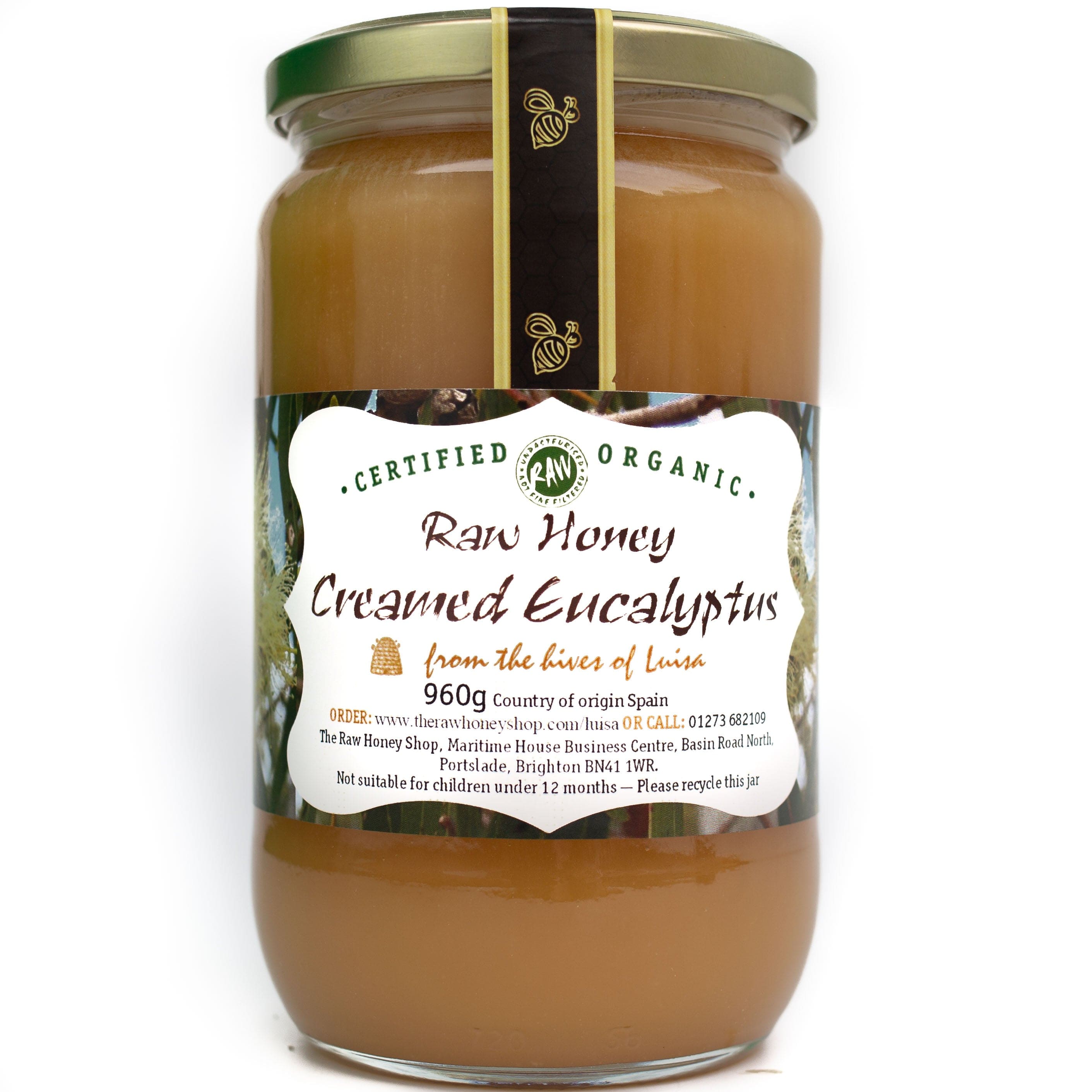
Luisas roher, cremiger Bio-Eukalyptushonig ist ein zertifizierter Bio-Honig, reich an Enzymen, der von den Blüten der Eukalyptusbäume geerntet wird, die in der Küstenregion Asturiens wachsen. Kalt geschleudert zu einer seidigen, streichfähigen Textur, liefert er eine leichte, blumige Süße mit einem beruhigenden Bienenwachs-Nachgeschmack – ideal für alle, die ein milderes Rohhonigerlebnis bevorzugen.
Produkthighlights
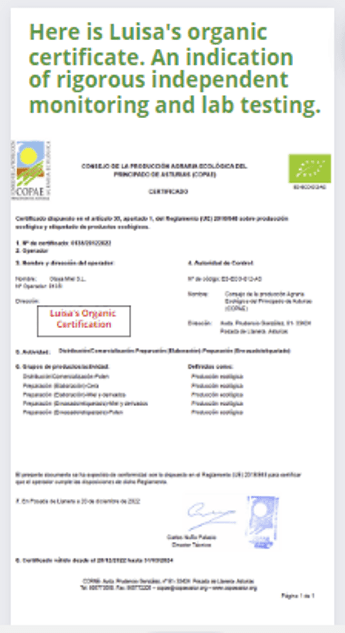
- Zertifiziert biologisch, roh & unpasteurisiert
- Grob gefiltert und enzymreich
- Kaltgeschleudert für eine glatte Textur und feine Kristalle
- Blass-erdgelbe Farbe
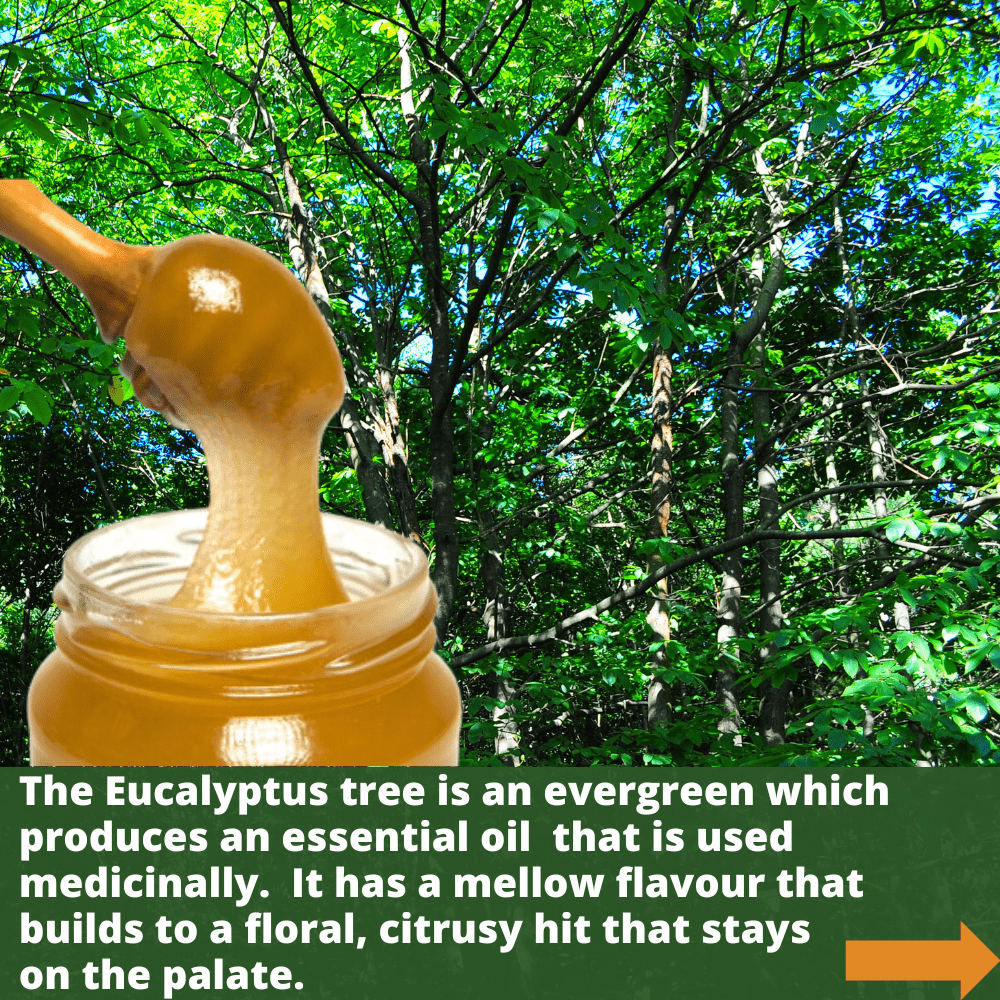
- Leichter, blumiger Eukalyptusgeschmack mit subtilen Bienenwachsnoten
- Stammt von Eukalyptusblüten aus Asturien, Nordspanien
Aroma
Frisch und subtil blumig mit einem klaren Eukalyptusbouquet – eine sanfte Einführung in den krautigen Honig.
Geschmack
Sanft und blumig mit einem Hauch von herzhaftem Bienenwachs. Mild und doch nuanciert, bietet einen ruhigen Honiggeschmack für den täglichen Gebrauch.
Farbe & Textur
Blass-erdgelb in der Farbe, mit einer seidig-cremigen Konsistenz dank Kaltschleudern und einer feinen, streichfähigen Kristallstruktur.
Herkunft
Geerntet von Eukalyptusbäumen in der unberührten, bio-zertifizierten wilden Küstenregion Asturiens – weit entfernt von Verschmutzung und reich an Biodiversität.
Herstellergeschichte
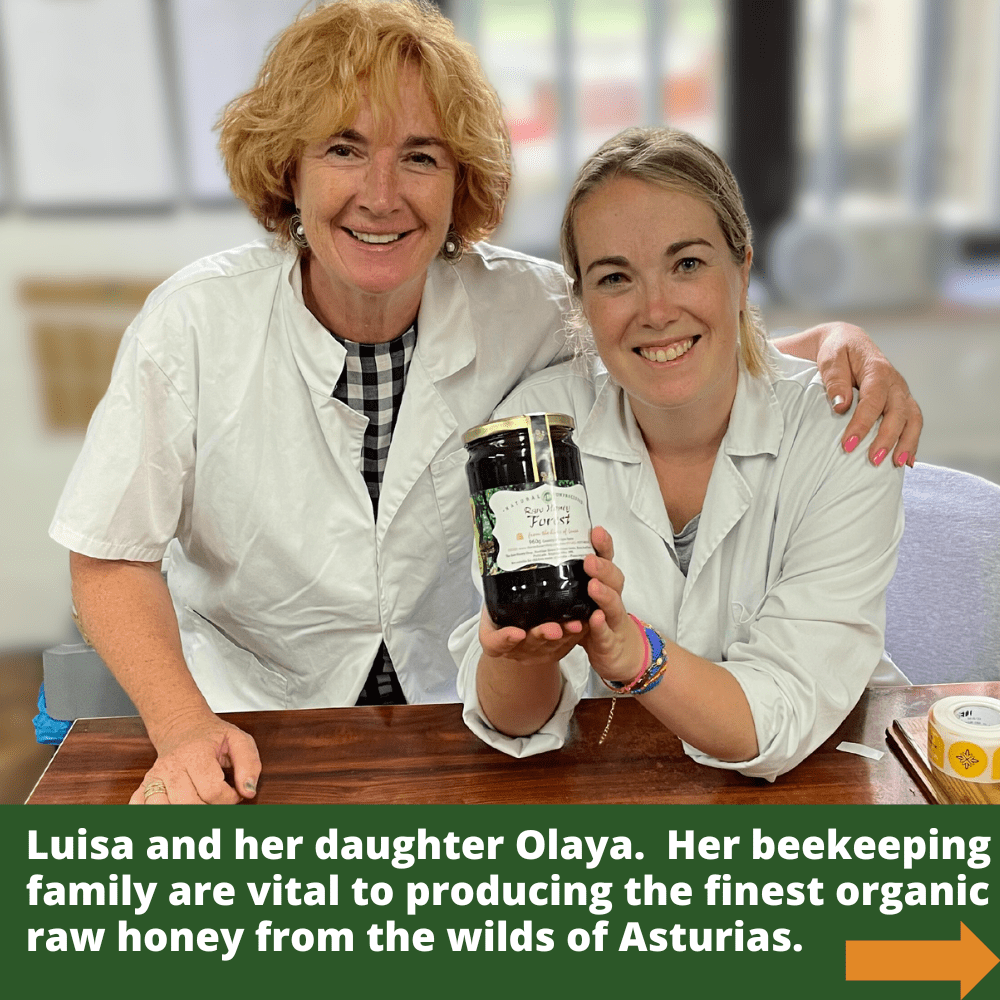
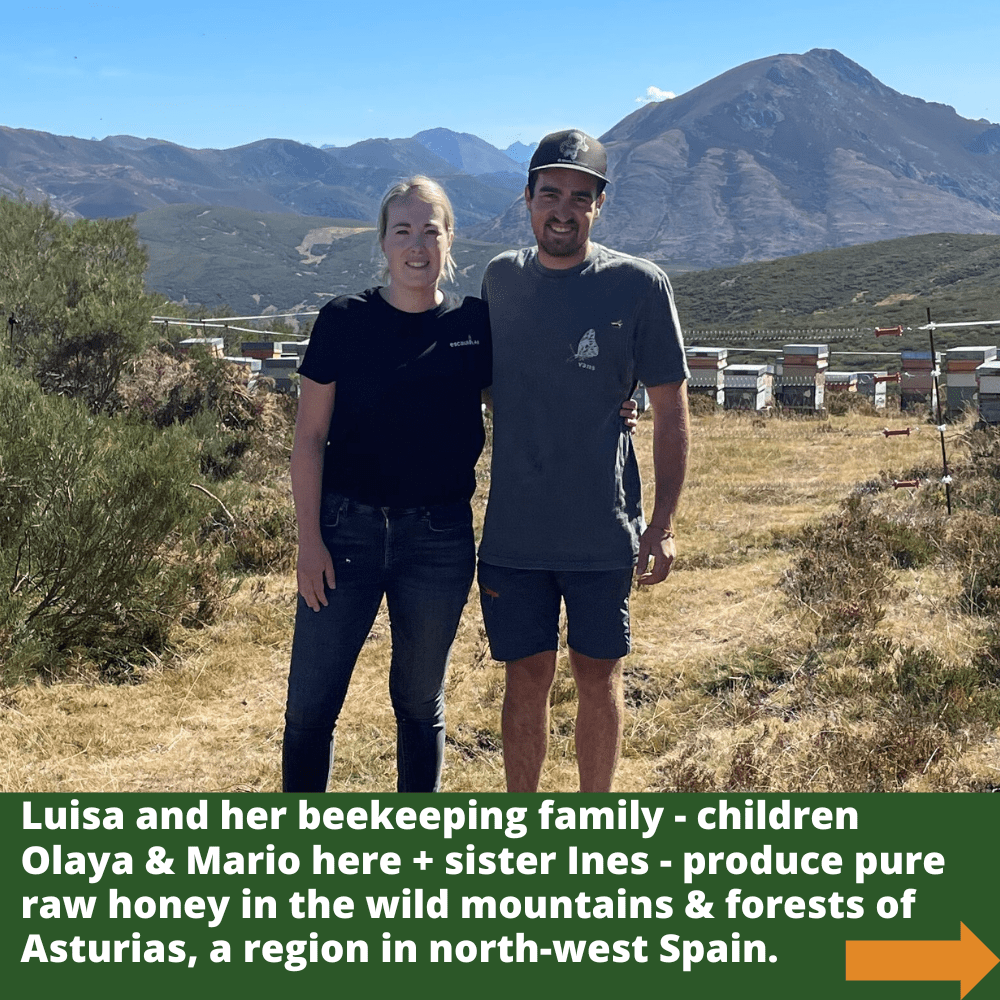
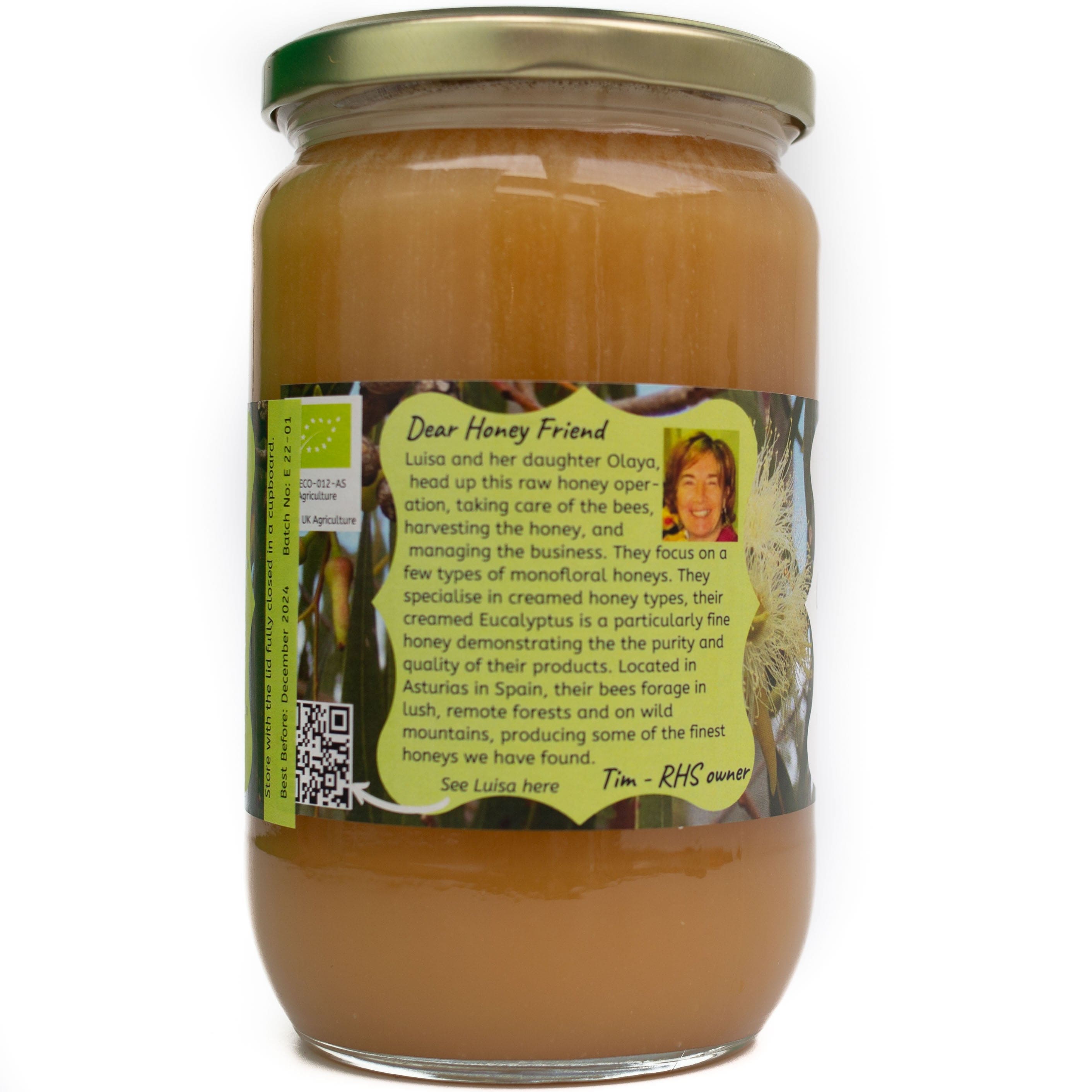
In Asturien ansässig, stellen Luisa und ihre Tochter Olaya hochwertige, zertifizierte Bio-Honige mit akribischer Sorgfalt her. Ihr Engagement für traditionelle Methoden stellt sicher, dass jedes Glas den reinen Geschmack und die Integrität ihrer Gebirgsblüten einfängt.
Häufige Verwendungen
- Hautpflege: Bekannt für seine beruhigenden, antiseptischen Eigenschaften – ideal für Hautunreinheiten, kleine Schürfwunden oder Gesichtsmasken.
- Backen & Kochen: Köstlich in Kuchen, Flapjacks, Broten, Marinaden und Tees – fügt eine milde blumige Note hinzu, ohne zu dominieren.
🧊 So lagern Sie Ihren Honig
An einem kühlen, dunklen Ort aufbewahren, um Enzyme, Textur und Geschmack zu erhalten. Vermeiden Sie Hitze und direktes Licht.
🍯 Warum Rohhonig anders ist
Rohhonig gelangt mit minimaler Verarbeitung – ohne Erhitzen oder übermäßige Filterung – direkt vom Bienenstock ins Glas und bewahrt dabei Pollen, Enzyme, Antioxidantien und seinen ausgeprägten natürlichen Charakter.
🌀 Kristallisation
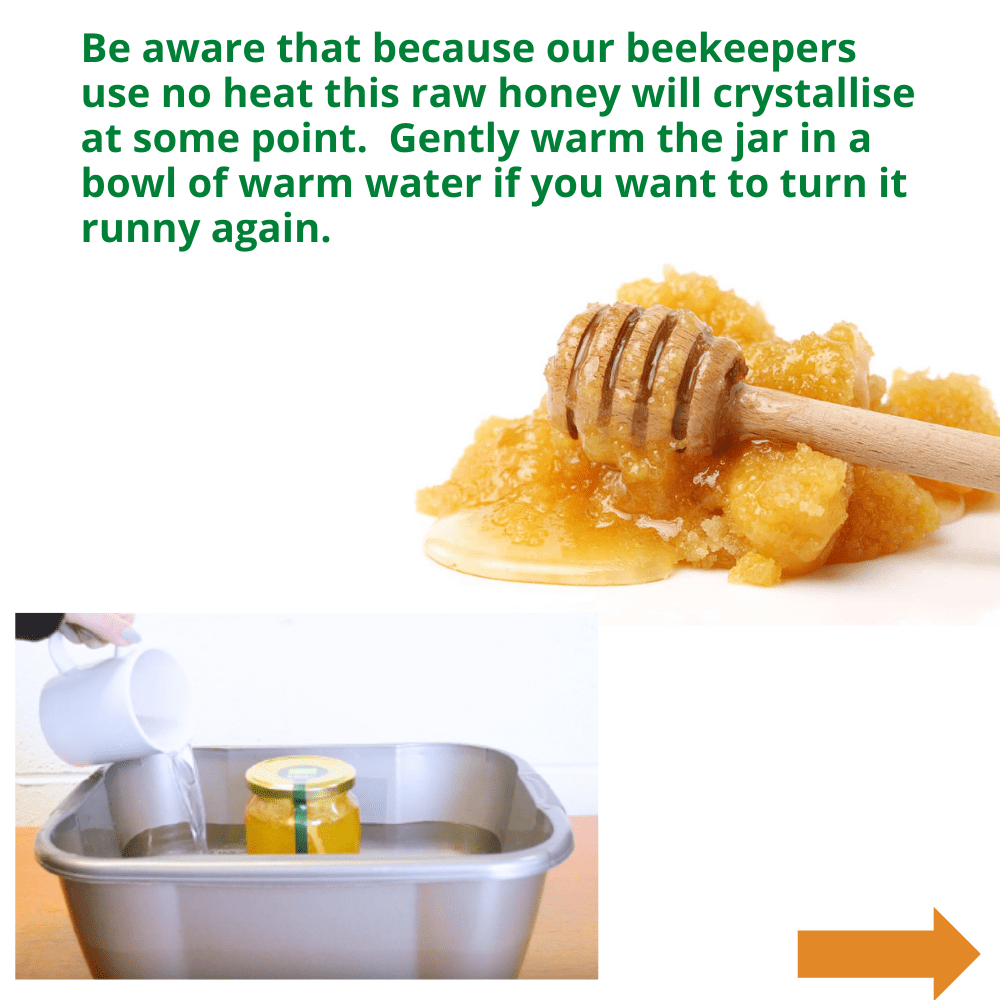
Kaltgeschleudert, um die Kristallgröße und -textur zu kontrollieren. Kristallisation ist natürlich – kein Mangel – und trägt zur luxuriösen Streichfähigkeit bei. Weitere Informationen finden Sie in unserem Flüssighonig-Leitfaden.
🏪 Über uns
Der Rohhonig-Shop bietet ROHE, unpasteurisierte, 100% natürliche Honige an. Seit 2008 ist unser Katalog auf über 30 rohe und biologische Sorten angewachsen – jede mit Sorgfalt und Reinheit hergestellt.
📸 Haftungsausschluss für repräsentative Fotos
Das Produktfoto ist repräsentativ. Farbe und Textur können je nach Saison und Kristallisationszustand variieren. Bitte überprüfen Sie den tatsächlichen Produkttitel und die Beschreibung.
Roher, cremiger Eukalyptushonig aus kontrolliert biologischem Anbau Creamed
- Regulärer Preis
- £26.99
- Verkaufspreis
- £26.99
- Regulärer Preis
-
Unsere Rückgabe- und Erstattungsrichtlinien
Diese Richtlinie gilt nur für unsere Einzelhandelsbestellungen. Wenn Sie ein Geschäftskunde sind, kontaktieren Sie uns bitte direkt.
WIE KANN ICH EINE RÜCKSENDUNG VORNEHMEN?
Sollte es bei Ihrer Bestellung ein Problem geben, kontaktieren Sie uns bitte per E-Mail unter info@therahneyshop.com oder telefonisch unter 01273 682109. Geben Sie nach Möglichkeit Ihre Bestellnummer und eine detaillierte Beschreibung des Problems an. Falls eine Rücksendung erforderlich ist, muss das Produkt ungeöffnet und im Originalzustand an uns zurückgeschickt werden. Verpacken Sie es daher bitte sorgfältig in der Originalverpackung oder einer geeigneten Alternative. Wir stellen Ihnen ein kostenloses Rücksendeetikett zur Verfügung. Sobald wir das Paket erhalten haben, erstatten wir Ihnen den vollen Kaufpreis oder senden Ihnen einen Ersatz.
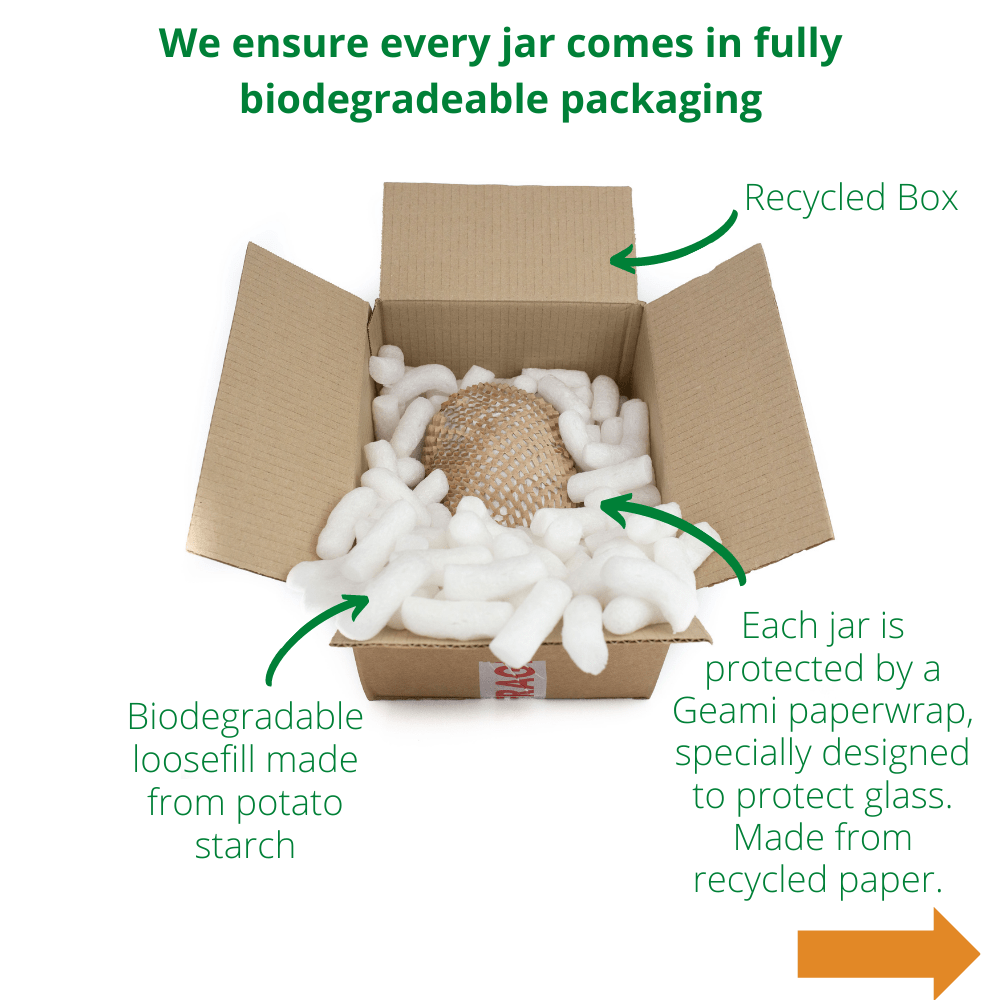
WICHTIG : Sollte Ihre Bestellung beschädigt angekommen sein, entsorgen Sie bitte zerbrochene Gläser und Glasscherben umgehend und sicher. Versuchen Sie bitte nicht, die Gläser zu waschen oder zu reinigen, da kleine Absplitterungen Schnittverletzungen verursachen können.
Kontaktieren Sie uns unter info@therahneyshop.com und teilen Sie uns die Details mit, einschließlich Ihrer Bestellnummer. Fügen Sie nach Möglichkeit Bilder bei. Diese helfen uns, unsere Abläufe zu verbessern und eventuelle Ansprüche gegenüber dem Versandunternehmen geltend zu machen.
Wir werden dieses Problem lösen, indem wir Ihnen entweder umgehend ein neues Produkt zusenden oder Ihre Bestellung vollständig erstatten.
Falls Ihre Bestellung eine große Dose oder einen Behälter mit einem Gewicht von über 1 kg umfasst und beschädigt ankommt:
Leider können wir Dosen und Becher über 1 kg nicht zurücknehmen. Sollte Ihre Dose oder Ihr Becher leicht beschädigt und undicht sein, erstatten wir Ihnen gerne einen Teil des Kaufpreises für den Ihrer Meinung nach verlorenen Honig. Ganze Dosen oder Becher können wir leider nur ersetzen, wenn mehr als 50 % des Honigs verloren gegangen sind. In diesem Fall bitten wir Sie, uns Fotos zuzusenden, damit wir den Schaden beurteilen und den Ersatz abstimmen können.
Sale-Artikel werden wie beschrieben verkauft, Rückgaben sind ausgeschlossen.
Wir hoffen, dass Sie mit keinem Honig, den Sie bei uns kaufen, jemals unzufrieden sein werden. Sollte dies jedoch ausnahmsweise einmal der Fall sein, kontaktieren Sie uns bitte so schnell wie möglich, und wir werden gerne eine Lösung für Sie finden.
Unsere Rückgabebestimmungen
Sollte es ein Problem mit Ihrem Honig geben – vorausgesetzt, die Versiegelung ist unbeschädigt und die Verpackung ungeöffnet (d. h. der Honig muss sich in neuwertigem Zustand befinden) – können Sie ihn innerhalb von 35 Tagen nach Ihrer Bestellung an uns zurücksenden. Ausgenommen sind reduzierte Artikel, die gemäß der Beschreibung verkauft werden und daher vom Umtausch ausgeschlossen sind.
Wir werden Ihre Rückerstattung innerhalb von 14 Tagen nach Erhalt der zurückgesandten Ware(n) oder des Nachweises über die Rücksendung der Ware (z. B. ein Versandbeleg der Post) bearbeiten. Sie erhalten den vollen Kaufpreis des/der Produkte(s) sowie die ursprünglich gezahlten Versandkosten zurückerstattet.
Wenn Sie einen Teil einer größeren Bestellung zurücksenden, erhalten Sie möglicherweise nur einen Teil der gezahlten Versandkosten zurückerstattet.
Bitte beachten Sie, dass wir für kristallisierten Honig weder Rückerstattungen noch Ersatzlieferungen leisten können.
Wir geben auf unserer Website den Zustand jedes Honigs an – flüssig oder kristallisiert. Diese Angabe basiert jedoch auf unserem besten Wissen und der Zustand kann sich schnell ändern, insbesondere in den kälteren Monaten. Die Kristallisation ist ein völlig natürlicher Prozess (auch verarbeiteter Honig kristallisiert mit der Zeit). Sollten wir den Honig als flüssig angegeben haben und er bei Erhalt kristallisiert sein, bedeutet dies lediglich, dass er schneller kristallisiert ist als erwartet. Dies kann vorkommen und ist kein Hinweis auf einen Mangel. Daher fällt der Honig auch nicht unter unsere Rückgabebestimmungen.
Bitte beachten Sie, dass Rückerstattungen für als Geschenk gekaufte Artikel nur an den ursprünglichen Käufer erfolgen können.
The Raw Honey Shop behält sich das Recht vor, diese erweiterte Rückgaberichtlinie nach eigenem Ermessen anzuwenden und auszulegen.
Verbrauchervertragsbestimmungen
Wenn Sie unsere Produkte online oder telefonisch gekauft haben, unterliegen Sie den gesetzlichen Bestimmungen zum Verbrauchervertragsrecht .
Die Verbrauchervertragsrichtlinie gilt nicht für verderbliche Waren (z. B. frisches Gelée Royale und frischer Bienenpollen) oder Waren, deren Siegel aus Gründen des Gesundheitsschutzes und der Hygiene beschädigt ist.
Falls der/die erhaltene(n) Artikel aus irgendeinem Grund fehlerhaft ist/sind oder nicht der Beschreibung entspricht/entsprechen, ist Ihr Recht auf Rückgabe des/der Artikel(s) im Consumer Rights Act 2015 geregelt.
Wenn Sie Fragen haben oder Hilfe benötigen, kontaktieren Sie uns bitte unter info@therewneyshop.com oder telefonisch unter +44 (0) 1273 682109.
Luisas roher, cremiger Bio-Eukalyptushonig
Ein glatter, kaltgeschleuderter Rohhonig aus Asturien mit zarten blumigen Noten und einem sanften Bienenwachs-Finish – mild, vielseitig und perfekt für die Hautpflege oder subtile kulinarische Anwendungen.
Zusammenfassung
Luisas roher, cremiger Bio-Eukalyptushonig ist ein zertifizierter Bio-Honig, reich an Enzymen, der von den Blüten der Eukalyptusbäume geerntet wird, die in der Küstenregion Asturiens wachsen. Kalt geschleudert zu einer seidigen, streichfähigen Textur, liefert er eine leichte, blumige Süße mit einem beruhigenden Bienenwachs-Nachgeschmack – ideal für alle, die ein milderes Rohhonigerlebnis bevorzugen.
Produkthighlights
- Zertifiziert biologisch, roh & unpasteurisiert
- Grob gefiltert und enzymreich
- Kaltgeschleudert für eine glatte Textur und feine Kristalle
- Blass-erdgelbe Farbe
- Leichter, blumiger Eukalyptusgeschmack mit subtilen Bienenwachsnoten
- Stammt von Eukalyptusblüten aus Asturien, Nordspanien
Aroma
Frisch und subtil blumig mit einem klaren Eukalyptusbouquet – eine sanfte Einführung in den krautigen Honig.
Geschmack
Sanft und blumig mit einem Hauch von herzhaftem Bienenwachs. Mild und doch nuanciert, bietet einen ruhigen Honiggeschmack für den täglichen Gebrauch.
Farbe & Textur
Blass-erdgelb in der Farbe, mit einer seidig-cremigen Konsistenz dank Kaltschleudern und einer feinen, streichfähigen Kristallstruktur.
Herkunft
Geerntet von Eukalyptusbäumen in der unberührten, bio-zertifizierten wilden Küstenregion Asturiens – weit entfernt von Verschmutzung und reich an Biodiversität.
Herstellergeschichte
In Asturien ansässig, stellen Luisa und ihre Tochter Olaya hochwertige, zertifizierte Bio-Honige mit akribischer Sorgfalt her. Ihr Engagement für traditionelle Methoden stellt sicher, dass jedes Glas den reinen Geschmack und die Integrität ihrer Gebirgsblüten einfängt.
Häufige Verwendungen
- Hautpflege: Bekannt für seine beruhigenden, antiseptischen Eigenschaften – ideal für Hautunreinheiten, kleine Schürfwunden oder Gesichtsmasken.
- Backen & Kochen: Köstlich in Kuchen, Flapjacks, Broten, Marinaden und Tees – fügt eine milde blumige Note hinzu, ohne zu dominieren.
🧊 So lagern Sie Ihren Honig
An einem kühlen, dunklen Ort aufbewahren, um Enzyme, Textur und Geschmack zu erhalten. Vermeiden Sie Hitze und direktes Licht.
🍯 Warum Rohhonig anders ist
Rohhonig gelangt mit minimaler Verarbeitung – ohne Erhitzen oder übermäßige Filterung – direkt vom Bienenstock ins Glas und bewahrt dabei Pollen, Enzyme, Antioxidantien und seinen ausgeprägten natürlichen Charakter.
🌀 Kristallisation
Kaltgeschleudert, um die Kristallgröße und -textur zu kontrollieren. Kristallisation ist natürlich – kein Mangel – und trägt zur luxuriösen Streichfähigkeit bei. Weitere Informationen finden Sie in unserem Flüssighonig-Leitfaden.
🏪 Über uns
Der Rohhonig-Shop bietet ROHE, unpasteurisierte, 100% natürliche Honige an. Seit 2008 ist unser Katalog auf über 30 rohe und biologische Sorten angewachsen – jede mit Sorgfalt und Reinheit hergestellt.
📸 Haftungsausschluss für repräsentative Fotos
Das Produktfoto ist repräsentativ. Farbe und Textur können je nach Saison und Kristallisationszustand variieren. Bitte überprüfen Sie den tatsächlichen Produkttitel und die Beschreibung.